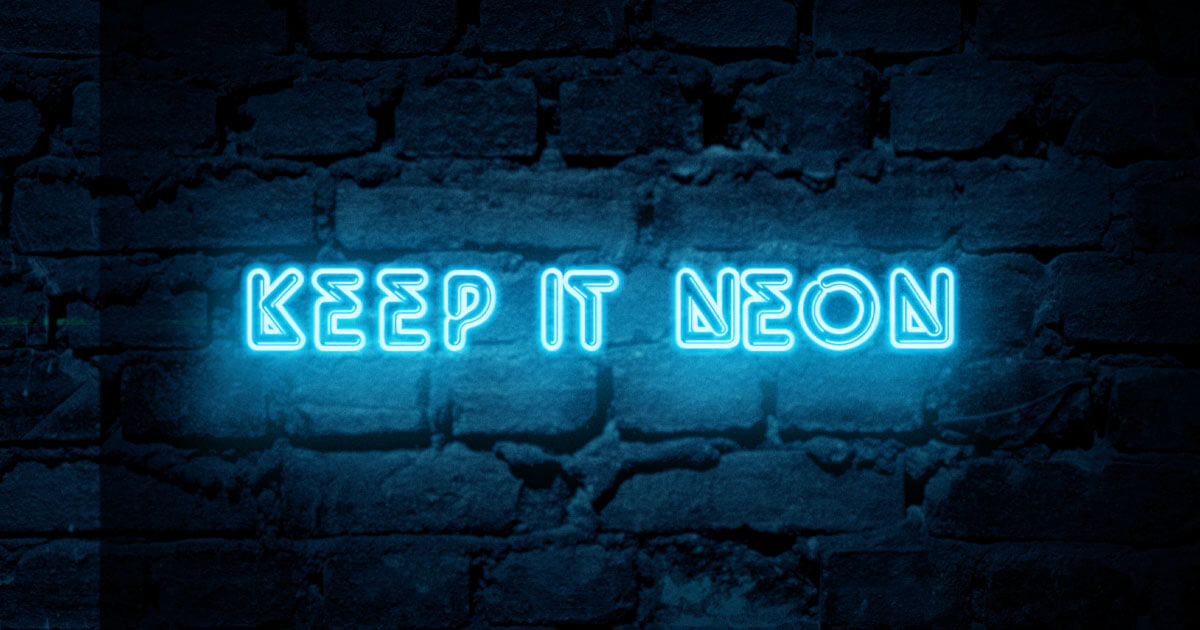

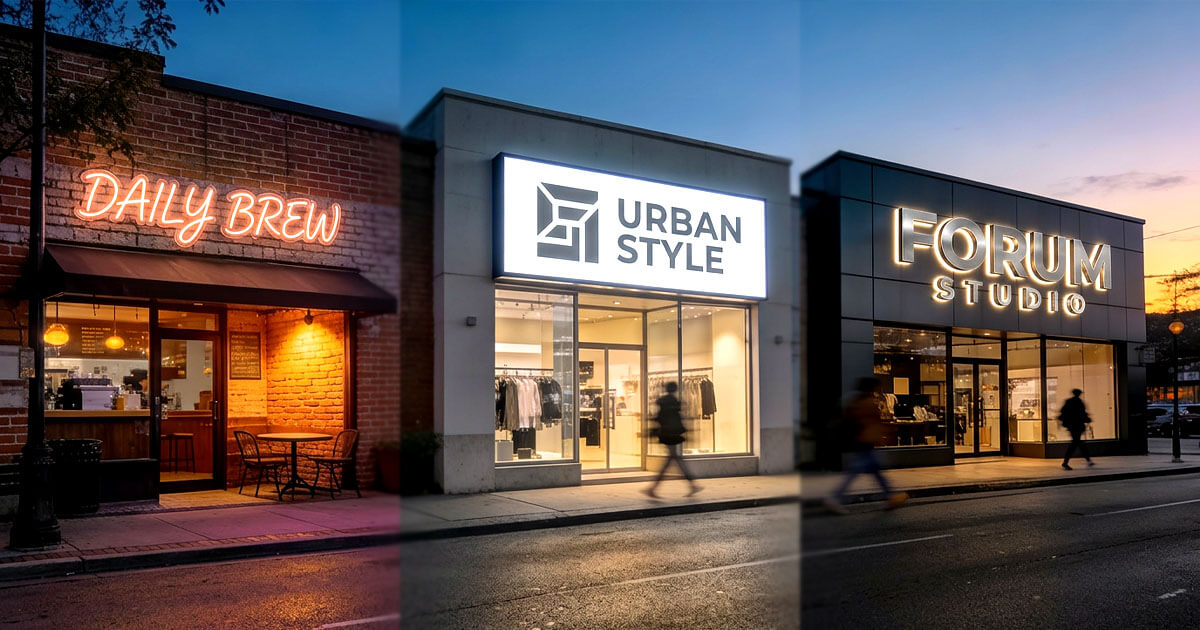
Type a phrase into one of the new AI neon tools and a glowing sign shows up on your screen in about four seconds. Pink script, dark brick wall, soft halo. It looks incredible. Then you try actually to order the thing, and it quietly falls apart.
That gap is the whole story here. AI-generated custom neon signs went from a novelty to a standard feature on site after site, and the images these tools spit out are genuinely pretty. Buildable is another matter.
There's a real difference between a picture of a neon sign and a plan: a workshop can turn into a light on your wall, and most tools stroll right past it. We've tested some AI neon generators against the way a sign is actually made. Some of it helps. A lot of it sets buyers up for a letdown.
Here's how AI proves useful when you're designing custom neon signs, where it falls short, and why the most important parts still need a human touch.
What an AI Neon Sign Generator Actually Makes
Most tools sold as an AI neon sign generator are image generators in a neon costume. You type a prompt, they hand back a picture. Pixazo, Sketchto, Mew Design, Vondy, and a handful of others all run the same play. A few of them are refreshingly honest about their limits, too: their own help pages admit they can't create complex custom illustrations or hand-drawn elements, and that important print details like bleed and crop marks don't show up in the files.

Read that twice. The output is art, not a spec. No dimensions. No idea why your wall is 90 centimeters wide. It renders a glow that looks like bent glass, when most signs sold today (yours included, if you buy one this year) are LED neon flex mounted on a cut acrylic backboard. The picture is a mood. A mockup is a measurement.
Picky? Sure. Right up until you're the one holding a sign that showed up three inches shorter than the one in your head.
Where the AI Mockup Falls Apart
The prettier the image, the more it hides. Four places it breaks down every single time:
-
Legibility at real size. A script that looks elegant as a thumbnail can turn into a tangled blob once it's a physical tube. The AI never checks. A designer does.
-
Color that lies. Screens show neon as pure saturated light. Real LED neon has warmth and a fixed color palette, so the electric blue glowing on your monitor might not be available as an actual tube.
-
Logos and odd shapes. This is where the tools face-plant. Feed one your café logo, and you'll get something vaguely logo-shaped, not your actual mark: signature fonts, mascots, weird outlines: guesswork, all of it.
-
Consistency. Ask for three versions, and you'll get three different signs, not one sign in three colors.
None of that makes the tools useless (more on their real job in a second). It makes them the first stretch of the work, dressed up to look like the finish line.
The Part AI can't do: Turning a Picture into a Real Neon Sign
Between a nice image and a sign on your wall sits a stack of decisions the picture never sees. That stack is the human's job.
 A buildable neon design has to answer real questions. Where does the LED flex start and stop? Looped letters, like a lowercase e or an a, need their tube path routed so the light reads cleanly instead of leaving dead gaps. The backboard is cut to shape or kept as a clean rectangle, sized to your space.
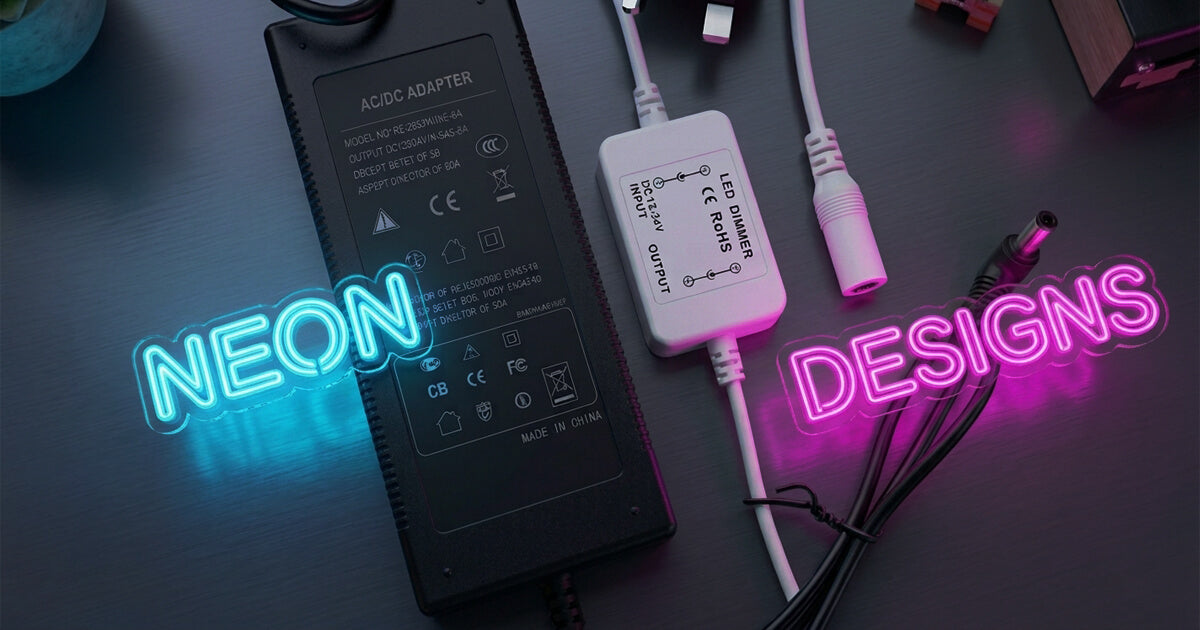
Wire holes are drilled where each segment ends, so mounting points land where screws can actually reach. A power supply and usually a dimmer need a home. Every one of those calls nudges the price.
An AI image answers none of that. Our in-house designers answer all of it before you've paid a cent, which is the whole reason a proper mockup exists. You see the real proportions, the real color, the real layout. Then you get to say bigger, warmer, move the heart. (People move the heart a lot.)
Try that with an AI generator and the gap shows up fast. You can't tell it to make a letter like "R" a touch shorter and warm the pink up a shade. You rewrite the prompt, run it again, and hope the next version lands closer to what you actually pictured. That's not revision; it's like playing a slot machine. With a person, you describe the change you want, they make it happen, and everything else you liked stays the same.
That back-and-forth is the human touch everyone waves around like a slogan. In neon, it isn't one. It's the line between a sign that fits your space and a sign that's technically what you typed.
So is AI Useless for Neon Sign? Not quite
I'm not telling you to close the tab. Pointed at the right job, an AI generator makes a decent brainstorming partner.

Sit with what that admits. The companies with the most to gain from full automation still put a person on every custom order. Not out of some sentimental thing about craft, but because the machine can't yet hit the accuracy a paying customer expects on something this personal. When the whole industry votes with its workflow, that says more than any tagline about AI doing it all.
How to Get a Custom Neon Sign you'll Actually Like
Buying rather than browsing? Here's a quick guide:
-
Start loose. An AI generator, a Pinterest board, or our own neon sign ideas all work for locking in the phrase, a rough color, and the mood.
-
Get a real mockup. Ask for a designed preview with true dimensions and real color before any money changes hands. Free, ideally.
-
Push back. Good designers expect revisions, so change the size, swap the font, warm the color up until it clicks.
-
Check the boring stuff. Mounting method, dimmer, power, and whether the color you're picturing exists as an actual tube.
You can see how sizing, color, and installation really play out in our neon sign guides, or start shaping something; try our neon sign customizer tool and hand it to a designer from there.
Where Does This Leave You?
AI neon tools aren't a scam, and they aren't magic. They're fast image makers that got very good at faking a glow, and they earn their keep in the messy early stage when you're still deciding what you even want. The second your idea has to become a physical object, with a real size, a color that exists, and a way to hang on a wall, the picture stops being enough.
That's the stage where people still matter. It's why Neon Designs still builds every mockup the traditional way, with our in-house graphic designers converting your logo to a neon sign before anything goes into production. You see the real thing, not a prompt's best guess.
Got an idea in your head? Get a free mockup and let a designer show you what it looks like lit up.


Share: