

Neon signs aren't fading out. Actually, the glow is getting brighter. What began as a nostalgic callback in Brooklyn cafes or Instagram mood boards has turned into something real. We aren't looking at a fleeting moment anymore. Homeowners and top-tier designers are putting serious money into neon signs as a legitimate architectural choice.
The data proves it. According to a 2030 forecast by Deep Market Insights, the global LED neon lights market is expected to grow from about $1.63 billion in 2025 to $2.65 billion by 2030, at roughly an 8.4% annual growth rate.
You see hospitality brands, gamers, creative agencies, and residential designers placing bets on neon. And it pays off. They get better ambiance, more customer engagement, and social media traction that you can't buy with standard lighting.
But why does this stick when other trends die? Because a neon sign works for everyone. A Gen Z gamer uses it to brand their bedroom. A minimalist uses it to break up a boring white wall. A restaurant owner uses it to get people to take photos. It delivers every time.
You're about to discover exactly why this luminous medium has moved from novelty to necessity, and how to make it work brilliantly in your space.
Neon Sign Popularity: Market Trends & Color Psychology
This comeback didn't happen by accident. A few things collided at once: nostalgia, better tech, and the fact that we all live our lives on camera now. Plus, the shift to LED made these signs safe enough to put in your house.

Two main drivers explain the surge. First, E-commerce sites changed the game. You don't need to know a guy at a neon sign shop anymore. You go online, type your phrase, pick a font, and it shows up at your door. Second, the LED revolution happened.
LED neon flex—that silicone tubing that mimics a glass tube neon sign—gives you the look without the danger. It doesn't break. It doesn't get hot. And you can bend it into almost any shape you can imagine.
But the psychological pull is the real hook. Color psychology isn't just fluff; it is biology. Colors hit your brain faster than language. Red spikes your heart rate—blue triggers the melanopsin system in your eyes, which wakes you up but also keeps you calm. Green signals relaxation. Yellow is pure mood energy, though it can tire your eyes out if you overdo it.
This matters. Neon signs saturate your visual field. A blue glow doesn't just light up a corner; it changes how your brain processes the entire room. That is why they are so effective at setting a vibe.
Neon Signs as a Modern Interior Design Essential
Here is the shift. The neon sign graduated. It isn't just a "fun accent" anymore. It's functional decor that changes how people use a space.

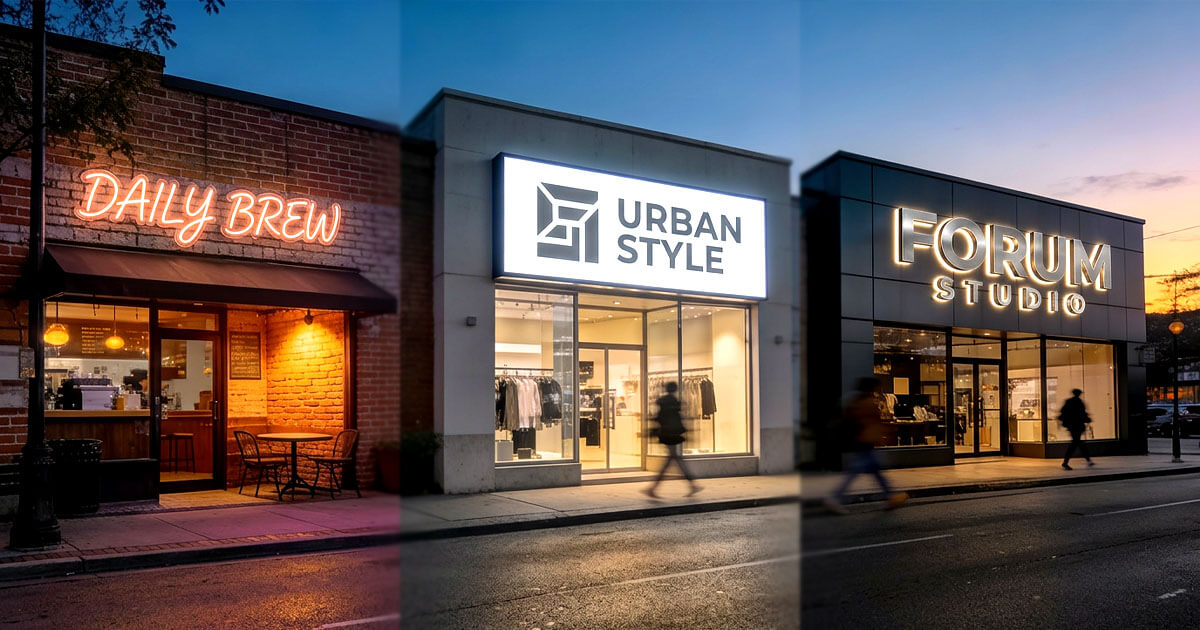
Look at where it's winning. Boutique hotels put bold statements in lobbies to signal luxury. Restaurants use them for wayfinding, directing you to the bar or the bathroom while keeping the mood heavy. Creative studios use them to say, "Innovation happens here." And houses? They are everywhere. Bedrooms, living rooms, gaming setups, and Zoom backgrounds are full of them.
Versatility keeps the trend alive. The sign adapts to the room, not the other way around.
-
Industrial spaces: They use crisp, bright lines against brick and concrete.
-
Scandinavian/Minimalist: They use soft white or pale pink to add interest without clutter.
-
Boho: They go for organic shapes like moons or flowers in warm colors.
-
Modern Chic: They stick to sleek geometry or short quotes.
What changed? We realized these things are practical. They give you personalization at scale. They control the mood. They are art and light in one package. And since modern LED neon signs stay cool and last for decades, you aren't buying a toy. You're making a design investment.
How Neon Sign Colors Influence Mood and Ambiance
Let's get real about living with these neon signs. Color impacts you, and a neon sign amplifies that impact because it's so intense. These aren't background shades. They are active.

Red pushes energy out. It grabs your attention because our brains evolved to perceive red as a signal of danger or opportunity. In a room, it creates excitement. Gamers love it. Bars need it. But be careful. Too much red feels aggressive. Use it as a statement, not a wall-to-wall wash.
Blue is the MVP for residential spaces. It does something weirdly contradictory: it makes you alert but settles your nerves. That is why blue signs work in bedrooms. You stay present, but you don't feel anxious.
Green is your balance point. It feels like nature. It doesn't demand your attention as red does. If you want a workspace that feels grounded, go green.
Yellow is happiness in a tube. It boosts creativity. But treat it like an espresso shot, powerful and great in short bursts. If you sit in a yellow room for ten hours, your eyes will get tired.
Your brain reacts to these inputs in milliseconds. When you walk into a room with a neon sign, you aren't just seeing a light fixture. You are experiencing a chemical reaction to that specific color.
Why Gen Z and Millennials Add Neon Signs in Interior Design
Younger generations aren't doing this for irony. It's not a costume. It's about owning their space.
Gen Z and Millennials drive this market because neon signs solve a few problems at once. Start with identity. These groups grew up curating who they are. A custom neon sign with your name, your handle, or a quote you live by is unapologetically yours. You are literally lighting up what matters to you.

Social media plays a huge role. Yes, it looks good on TikTok. But it's also about signaling. When you post a room with a custom neon sign, you show you belong to a community that cares about aesthetics.
Nostalgia hits differently for everyone. Millennials remember the pre-digital world, so neon sign feels retro. Gen Z likes the vibe. It references an era they didn't live through, which makes it cool without the baggage.
Control is the other factor. You can make a sign saying whatever you want. An inside joke. A gaming logo. A lyric. You aren't picking from a catalog of three options. You create it. For a generation that feels sorted by algorithms all day, that agency feels good.
And we can't ignore the price. You can get a custom neon sign piece for around $100 to $200 now. That opens the door for people who don't have massive interior design budgets but still want their room to look finished.
How Interior Designers Use Neon Signs in Modern Spaces
Pros don't just stick a neon sign on the wall and hope for the best. Professional interior designers use a neon sign as a strategy.

Instead of burying a neon sign as accent lighting, designers deploy it as the architectural anchor of a room, making it the focal point around which all other elements organize.
Living Rooms: The neon sign acts as art. It usually sits against a neutral background. Designers pick cool tones (blues) to calm the room down or warm accents (pink) to make it welcoming. Size matters here. You need something 36 to 60 inches wide, or the room swallows it.
Bedrooms: This gets personal. The goal is relaxation. You see a lot of soft pinks and blues here. The neon signs are smaller, usually 24 to 36 inches. It's less about shouting a statement and more about a personal mantra.
Home Offices: It's about focus. Blue shows up a lot here because it helps concentration. Words like "Create" or "Focus" act as glowing sticky notes. They keep you on track.
Placement is the trick. Don't put them in corners; they look like mistakes. And don't put them right above eye level, where they create glare. The sweet spot is eye level or slightly above, on a wall that has good contrast. Dark walls make the color pop, but light walls are becoming popular for a softer, more modern look.
Why Eco-Conscious Interior Designers Choose LED Neon Signs
Sustainability isn't an afterthought anymore. It's a requirement. An LED neon sign is the obvious answer for designers who care about the planet.

Look at the power usage. LED neon signs use about 80% less electricity than glass neon and 95% less than old incandescent bulbs. A normal neon sign draws 10-30 watts. Running one all day and night costs pennies, literally around $1.50 a month. You don't have to feel guilty about leaving it on.
They also last forever. Expect 50,000 to 100,000 hours of light. That is 10 to 20 years. A glass neon sign usually dies around 10,000 to 20,000 hours. A longer lifespan means less trash in landfills and less manufacturing waste.
Carbon reduction is real, too. Because they use so much less power, the emissions from a neon sign over its lifetime are tiny compared to those from other lighting. And the materials are safer. No mercury. No argon gas. It's just silicone, LEDs, and some plastic.
If you ever need to throw it away, you can recycle the parts at an e-waste center. It supports the circular economy concept, which makes it an easy sell for eco-conscious clients.
For designers positioning themselves around sustainability, whether through LEED certification, ESG considerations, or client values, the LED neon sign has become a legitimate solution. It's a rare design choice where aesthetics, performance, and environmental responsibility align completely.
Neon Sign Myths Debunked: Safety, Cost & Durability Facts
People still believe myths about neon signs from the 1980s. But modern LED technology fixed almost all the old problems. Here's what's actually true for 2025:
Myth 1: They are toxic.
False. Modern neon signs contain no mercury or other hazardous gases. If you cut the tubing, nothing leaks out. It's just silicone.
Myth 2: You'll get shocked.
Nope. They run on 12V or 24V DC power. That is the same as your phone charger. You could touch a live wire and be fine (though don't do that).
Myth 3: They get hot.
The glass neon sign got hot. LED neon sign, stay cool. You can touch them after they've been on for a week—no fire risk.
Myth 4: They are expensive to run.
It costs about 4 to 12 cents a day to run one. That is $40 to $60 a year if you never turn it off. And since they last for a decade, the value is there.
Myth 5: If it breaks, you're dealing with hazardous materials.
If you break an LED neon sign, you have a broken light—no glass shards. No fumes. You toss it in the electronics recycling bin and move on.
Modern LED neon signs have eliminated nearly all the concerns that made traditional neon signs problematic. They're safe around children and pets, they won't rack up your electricity bill, and they're built to last. If you've been hesitant about adding neon to your space, these myths shouldn't hold you back any longer.
Choosing the Perfect Neon Sign for Your Interior Style
How do you actually pick one? Stop guessing and use this five-step method.

Step 1: Define the mood.
Do you want calm (blue/green) or energy (red/orange)? The color decides the feeling. Figure that out first.
Step 2: Check your room.
Look at your furniture. If you have a neutral room, a white or pastel neon sign looks classy. If your room is loud and colorful, pick a neon sign that matches one of the existing colors to avoid it looking chaotic.
Step 3: Use the 50-70% rule.
This is about size. The neon sign should take up about half to two-thirds of the available wall space.
-
Small rooms: 12-18 inches.
-
Bedrooms: 24-36 inches.
-
Living rooms: 36-60 inches.
-
Too small looks cheap. Too big looks messy.
Step 4: Pick your content.
Simple wins. A single word like "Dream" or "Hustle" hits harder than a long sentence. If you go for a symbol, make sure it's something you actually like, not just what's trendy on Pinterest.
Step 5: Match the light temperature.
This is the pro tip. If your room has warm, yellow light bulbs, get a warm-white or pink light. If your room has bright white daylight bulbs, get a cool blue or bright white neon sign. Match the warmth, and it fits perfectly.
A warm-white neon sign feels different in a room with warm-temperature lighting than in one with cool-temperature lighting. If your room uses warm bulbs (2700K color temperature), a warm-white neon sign (cream, soft pink) harmonizes beautifully.
If your room uses cool-temperature lighting (5000K+), cool-toned neon signs (blues, purples, whites) create cohesion. You're choreographing light, not just adding a light source.
Room-specific sizing guidelines make this concrete:
1. A bedroom calls for something in the 24 to 36 inch range.
That's your sweet spot. Go smaller and the sign disappears into the wall. Go larger and it starts feeling invasive in a space meant for rest. The headboard wall works beautifully, or pick a feature wall if you want to anchor the room's visual interest.
2. Living rooms can handle more.
We're talking 36 to 60 inches here. Bigger signs command the space. They set the tone. You'll want them above a sofa or wherever your eyes naturally land when you walk in. That's where the impact matters most.
3. Offices and small spaces are different.
Stick with 12 to 18 inches. Square footage is tight, so proportion becomes critical. A smaller sign still brings personality. It just doesn't crush the room.
4. Wall color shapes everything.
Dark walls, black or deep shades, make neon absolutely sing. Any bright neon will pop against that backdrop. Light walls (whites, creams, that range) need more saturated neon colors to cut through. Otherwise the sign blends rather than stands out.
5. Patterned walls require thought.
Competing visuals can turn messy fast. Mid-tone walls? They're flexible. Most neon signs land well without needing tons of contrast adjustment.
This framework cuts through the confusion. You're not guessing anymore. You're following clear criteria that actually narrow your options down to what works.
You're ready to choose a neon sign that fits your space. Use these guidelines to avoid common mistakes, and you can spend your time on what matters: imagining how it'll look in your room.
Key Takeaways: Neon Signs in Interior Design
Here are the bottom lines that validate neon signs as a legitimate design investment:

1. It's big business. The market is heading toward $2.65 billion. This isn't a bubble; it's a shift.
2. Safety is solved. No heat, no shock, no toxins. The risks are gone.
3. Your brain reacts. Color changes your physiology instantly. Use that to your advantage.
4. You are the designer. Customization is easy and standard now.
5. It's authentic. For Gen Z and Millennials, this is about self-expression, not irony.
6. It fits anywhere. From industrial lofts to boho bedrooms, there is a style that works.
7. It's eco-friendly. Low energy, long life, and recyclable materials make it a responsible choice.
8. Business owners love it. It drives traffic and sets the mood for cheap.
9. Forget the myths. The old dangers of glass neon sign don't apply to LED neon signs.
10. Function meets art. It lights the room and acts as a focal point.
The question isn't whether you should get a neon sign. It's which one belongs on your wall.




Share: