
You're not imagining it: "Add neon sign" has gone from mood board inspiration to the default answer for making any event feel special, whether you're planning a wedding, styling a brand activation, or throwing a birthday party in your own living room. The challenge is turning that glowing quote wall or logo idea into something that fits the budget, suits the room, works with the power access, and actually looks good in photos.
Maybe you're an event planner juggling floor plans and client approvals, or maybe you're just organizing a one‑off celebration and wondering if a custom neon sign is worth it.
Either way, this guide is here to give you real numbers, sizing logic, and practical trade‑offs so you can stop guessing on costs, lead times, and what will actually read in the too, even if this is your first time planning an event.
We'll walk through when neon genuinely elevates an event (and when it's overkill), how to choose sizes and colors that don't fight your design, and when renting is smarter than buying. What no one tells you about outdoor setups, power, and safety.
After reading this guide, you'll be able to talk about neon signs with the same confidence you have about catering or décor, making clear decisions, setting realistic expectations, and offering recommendations that make sense, whether you're a pro or just planning one big night.
What Makes Neon Signs a Must‑Have for Events?
If you strip away the hype, neon signs do three things events actually need: they grab attention, they anchor photo moments, and they subtly guide people through a space. LED neon signs (the flexible, low‑voltage kind you see all over Instagram) dominate this shift because they're lighter, safer, and more energy‑efficient than traditional glass neon or fluorescent alternatives.
 On the market side, the global neon signs market was valued at about 1.3 billion USD in 2023 and is forecast to reach roughly 3.3 billion USD by 2032, while LED neon lights alone are expected to grow from around 1.5 billion USD in 2024 to about 2.65 billion USD by 2030.
When a category steadily compounds at around 7–8% annually, it's no longer "nice‑to‑have décor"; it's something clients subconsciously expect to see in event photos.
Neon signs for events are illuminated signs made from either traditional glass neon tubes or modern LED neon flex, used as statement décor, photo backdrops, and branding features at weddings, parties, and corporate events.
The modern default is LED neon sign because it's safer, more durable, and more flexible for short‑term setups. If your goal is a hero moment that reads clearly in photos and doesn't terrify the venue's safety officer, LED is the workhorse you build around.
Across signage and decorative lighting, LED neon sign is now a part of the wider event and décor market, driven by demand from hospitality, retail, and residential design. That's the boring way of saying clients are literally expecting a glowing quote wall, branded backdrop, or directional neon somewhere in the venue.
When done right, neon sign becomes part of your event's identity, not just a prop you have to cram into the van at midnight.
Why neon signs matter at events:
-
Neon signs serve as an instant visual anchor for photos and content, such as wedding backdrops, stage walls, and entrance arches.
-
Corporate events, pop-ups, and trade shows can benefit from brand reinforcement through logo signs and slogan pieces.
-
It serves as a subtle wayfinding and zoning tool for areas such as bars, dance floors, photo booths, and VIP areas.
-
Neon signs serve as an energy-efficient alternative to traditional glass neon and fluorescent signage, consuming significantly less electricity per foot in many applications.
Someone apparently forgot to tell traditional glass neon that burning four times the power for the same effect isn't a flex anymore.
The Events Where Neon Signs Actually Shine
Neon sign isn't "just for weddings" anymore; that's where much content stops, and it's frankly lazy. LED neon sign shows up everywhere now: from trade show booths to low‑key baby showers.

Photo By Christian Agbede
Best events for neon signs
Here are the events where neon is most effective and what its role should be in each context.
| Event Type | Sign Style / Format | Typical Use Case |
|---|---|---|
| Weddings | Surname/phrase neon backdrop | Behind the couple, photo wall, sweetheart table accent |
| Birthday Parties | Name/age statement sign | Feature wall, dessert table, entrance backdrop |
| Baby Showers & Gender Reveals | Script or icon signs (clouds, stars) | Over dessert table, above chair, in selfie corner |
| Corporate Galas | Logo + tagline combination | Stage backdrop, press wall, donor recognition area |
| Product Launches | Product name / logo in neon | Hero display, unboxing corner, media photo zone |
| Trade Shows | High-contrast brand neon | Booth header, side wall, hanging feature |
| Brand Activations | Interactive or social-friendly neon | Immersive installations, selfie sets, "share-this" corners |
| Holiday Parties | Seasonal phrases / icons | Bar backdrop, entrance arch, dance floor focal point |
A few concrete scenarios you actually encounter when you're planning an event:
-
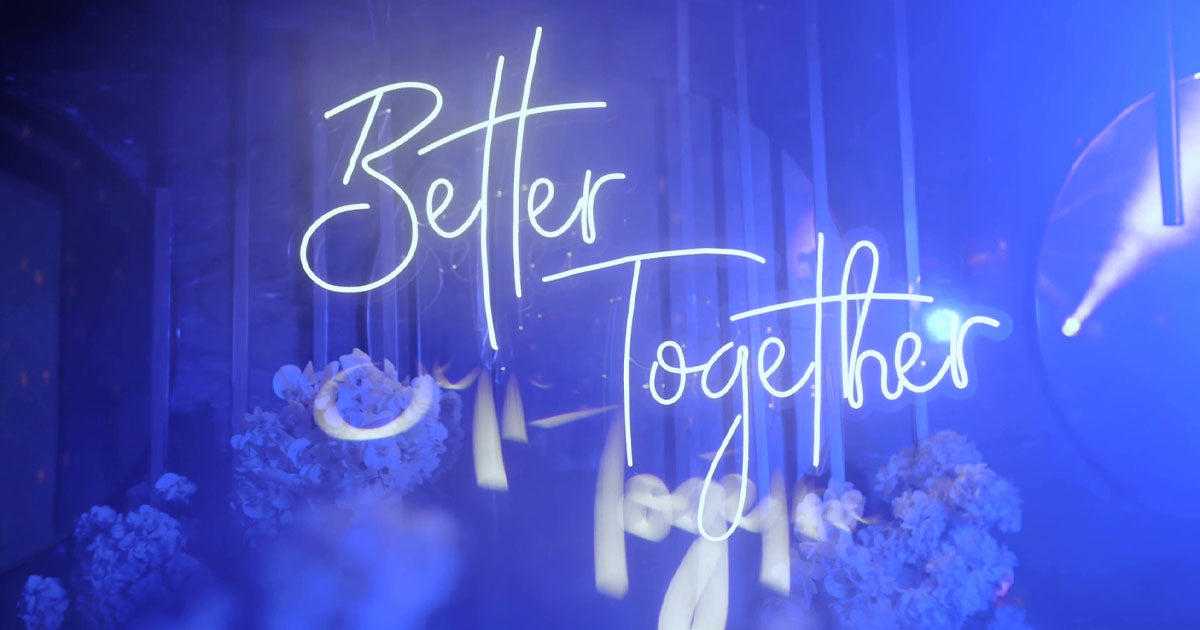
Weddings: Couple's surname or phrase ("The Parkers," "Better Together") behind the sweetheart table, then repurposed later as home décor.
-
Birthdays: Clean name sign for 18th/21st/40th, often paired with balloons and shimmer walls, your de facto Instagram wall.
-
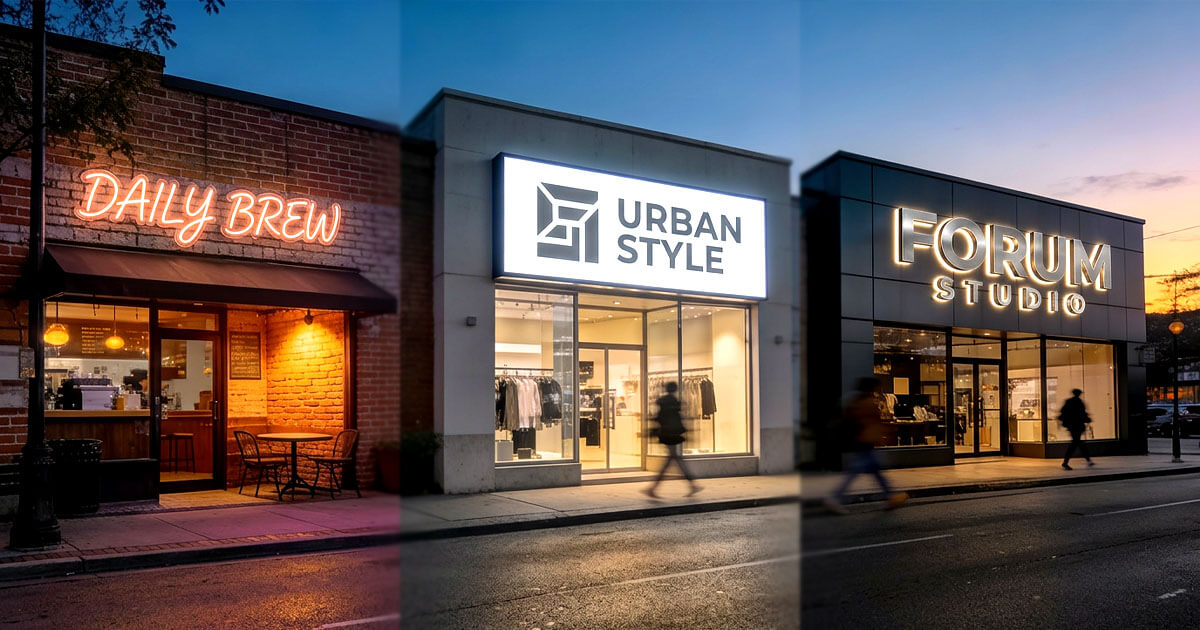
Corporate events: Logo signs on step‑and‑repeat walls, near check‑in, or flanking the stage so every speaker's photo quietly doubles as brand content.
-
Trade shows and activations: High‑mounted neon logos visible above eye level, plus smaller directional pieces inside the booth ("Try Me," "Photo Here") to pull people into specific experiences.
If you're still only using neon signs for "romantic boho weddings," you're leaving corporate budgets and recurring clients on the table.
Neon Sign Costs for Events: Real-World Pricing Breakdown
Let's talk about money, because "it depends" doesn't help when you're building a proposal or setting a realistic event budget. Recent pricing data from custom neon sign companies shows consistent ranges by size, with most event buyers landing roughly in the mid‑tier.

Typical neon sign price ranges by size
| Size Tier | Approx. Dimensions | Typical Price Range | Common Event Use |
|---|---|---|---|
| Small | 12–18 inches (30–45 cm) | 80–250 USD | Small phrases, arrows, tabletop accents |
| Medium | 24–30 inches (60–76 cm) | 180–500 USD | Wedding names, event titles, bar signage |
| Large | 36–48 inches (90–122 cm) | 400–1,200 USD | Main backdrops, stage pieces, trade show walls |
| Extra-Large | 60+ inches (150+ cm) | 900–3,000+ USD | Major brand walls, experiential installs |
These ranges match those reported by major custom neon sign companies, with most home and event buyers clustering around 200–600 USD for a personalized neon sign. Size isn't the only factor, though: line length, font complexity, logo art, and RGB-changing color controls all push costs up.
Cost per foot and what drives it
-
Simple LED neon text: roughly 50–150 USD per linear foot for straightforward scripts and basic colors.
-
Complex shapes/logos / RGB / outdoor-rated: often 150–300+ USD per linear foot, depending on the number of bends, layers, and colors.
If you're pricing a neon sign, assume:
-
One‑off private events: Most spend between 200 and 600 USD for a mid‑sized, photo‑ready sign.
-
Brand or venue installs: Budgets climb quickly. 800–2,000 USD is not unusual for large, long‑term branding pieces.
You can absolutely find cheaper options on marketplaces, but you'll usually pay for that "saving" in weaker brightness, poor mounting hardware, or shipping delays that make hosts and planners sweat.
How to Choose Custom Neon Signs for Events: A Planner’s Checklist
Choosing a neon sign is not just "pick a cute phrase and a font." If you don't match the sign to the venue scale and event purpose, it will either dominate the room or disappear in photos.

Step‑by‑Step Checklist for Planners
1. Start with the venue, not the phrase.
- Small indoor venues and photo corners usually accommodate 24–30-inch signs.
- Large ballrooms, stages, and trade show booths often need 36–48 inches or multiple smaller signs to avoid getting lost in wide shots.
2. Size for camera distance, not just in‑person viewing.
- If most photos will be taken 2–3 meters away (sweetheart table, photo booth), a 24–36 inch sign with medium‑thick strokes is usually enough.
- For 5+ meter viewing distances (stages, expo aisles), aim for 36 inches or more, or increase the overall height by stacking the wording onto two or three lines.
3. Choose color intentionally.
- Warm white and soft neutrals feel premium, flatter skin tones, and work with both daylight and evening lighting, which is why they dominate weddings and brand events.
- Strong colors like hot pink or electric blue can look incredible in nightlife settings, but may clash with moving lights or LED walls if you're not careful.
4. Prioritize font legibility at a distance.
- Delicate cursive looks beautiful close‑up, but can turn into a glowing squiggle in wide reception shots.
- For corporate work, trade shows, and brand activations, a clean sans‑serif or logo lockup tends to outperform script in both photos and video.
5. Lock copy and line breaks early.
- Every revision eats time, and some manufacturers charge for detailed redraws or additional routing work.
- Decide if you want names and dates, a short phrase, or a hashtag, and keep it tight. Long sentences almost always look worse lit up than they did in your notes.
When in doubt, imagine the exact Instagram Story or LinkedIn shot you want people to post. If the wording is illegible when cropped vertically on a phone, your sign is too small or too fussy.
For custom neon signs, you're locking in text forever. Have a second person review the spelling, capitalization, and accent choices before approving the design.
If you follow this chain: venue → viewing distance → size → color → font → wording, you'll stop buying "cute" signs that vanish the second the photographer turns on a flash.
Renting vs. Buying Neon Signs for Events: Which Actually Makes Sense?
Renting is great for one‑off phrases or when you’re late to the party; buying starts to win once you either reuse the sign or treat it as décor after the event.
The trade‑offs
| Factor | Renting Neon Sign | Buying Neon Sign |
|---|---|---|
| Upfront Cost | Lower (often 80–250 USD per event) | Higher (often 200–600+ USD for custom sizes) |
| Customization | Limited phrases, fonts, colors | Fully custom text, logos, colors |
| Reusability | One event only | Multiple events, home or office décor afterwards |
| Responsibility | Return on time, potential damage fees | Storage, occasional cleaning, potential repairs |
| Lead Time | Shorter, especially with in-stock designs | 3–5 weeks typical for custom, longer in peak season |
If you run multiple events a year as a planner, venue, or brand, you often recover the cost of a purchased sign after 2–3 uses, especially for evergreen phrases or reusable brand logos. For one‑off hosts, the main question is whether you'd proudly hang the sign at home or in an office afterward.
If you're planning a single, once-in-a-lifetime party (like a big birthday or engagement), renting a neon sign is often the easiest option: you get the look, without committing to storage or long‑term care.
But if you or your client sees the sign as a keepsake, surname, brand logo, or a phrase that genuinely means something, buying is almost always the smarter emotional and financial move.
Indoor vs. Outdoor Neon Signs: Weatherproofing, Wiring & Placement
Indoor and outdoor neon signs are not interchangeable, at least not if you want them to survive the night and keep your insurance company happy. If you're planning garden parties, beach weddings, or outdoor brand activations, weatherproofing is a non‑negotiable line item.

Photo By Shoham Avisrur
Key Differences You Need to Know
| Aspect | Indoor LED Neon Signs | Outdoor / Weatherproof LED Neon Signs |
|---|---|---|
| IP Rating | Often IP20–IP33 (basic dust protection) | Typically IP65+ (dust-tight, protected from water jets) |
| Construction | Lighter backing, standard power supply | Sealed edges (weather resistance), designed for rain, humidity, and outdoor use |
| Mounting | Ideal for walls, backdrops, frames | Suitable for outdoor walls, trusses, fences, freestanding rigs |
| Use Cases | Ballrooms, indoor stages, photo booths | Garden weddings, poolside events, festival stages, beach setups |
Many reputable neon sign companies explicitly label which models are suitable for outdoor use and quote IP ratings like IP65 (dust‑tight and protected against low‑pressure water jets) or IP67 (dust‑tight and protected against temporary immersion). Indoor‑only LED neon flex signs are fine for fair‑weather patios or covered terraces, but they are not meant to sit in the rain or heavy humidity for extended periods.
For outdoor events, you'll also want appropriately rated power supplies and connectors, plus mounting that can handle wind load, think solid backboards, cable ties to sturdy frames, and sensible placement away from direct spray or sand. If your weather plan is "we'll just hope it doesn't rain," you're asking a lot from a sign that was never designed to be outside.
Common Neon Sign Misconceptions Event Planners Need to Drop
If you’ve worked with older glass neon, you might still be carrying some bias that doesn’t apply to LED neon sign at all.

Myth vs. Fact for Event Safety
1. Myth: “Neon signs are too hot and unsafe near guests.”
Fact: Modern LED neon runs on low‑voltage DC, stays relatively cool to the touch, and uses flexible tubing rather than exposed glass.
2. Myth: “They’re expensive to run all night.”
Fact: LED neon uses far less energy than traditional neon, often around a fraction of the wattage per foot compared with glass neon and fluorescent lighting.
3. Myth: “Neon signs contain toxic gases.”
Fact: Classic glass neon mostly uses inert noble gases like neon and argon; LED neon uses no gas at all, just LEDs in flexible diffused tubing.
4. Myth: “They’re fragile and hard to transport.”
Fact: LED neon is usually made from flexible silicone or PVC with an acrylic backing, making it far more impact‑resistant than traditional glass tubes.
5. Myth: “You can’t use neon outdoors.”
Fact: Outdoor‑rated LED neon with proper IP ratings is specifically built for exterior use, including stages and architectural facades.
Most of the "neon sign is dangerous and fussy" narrative is about old‑school glass tubes, not the LED neon your clients are actually asking for.
If a venue still has a blanket "no neon" rule, what they usually mean is "no fragile, high‑voltage glass tubes near drunk people." LED neon is a very different technology, and part of your job as a planner is to educate them on that difference, ideally before install day.
How to Install Neon Signs for Events: Power, Placement, and Safety
You don’t need to be an electrician to install neon signs, but you do need a plan that goes beyond “we’ll figure it out on the day.” That plan should cover power, mounting, and cable safety.

Practical Installation Steps
1. Plan power before you confirm placement.
- Check where your outlets are and whether you need a generator, especially for outdoor or tented events.
- Confirm voltage and plug type if you’re sourcing from another region; cheap adapters are a common failure point.
2. Treat cables as part of the design.
- Route power cords along walls, behind backdrops, or under stages where possible.
- Any cable that crosses a walkway should be taped down with gaffer tape, not left to become an unplanned icebreaker for guests.
3. Choose the right mounting method.
- Backdrops and mesh frames: Use cable ties through pre‑drilled holes in the acrylic backboard.
- Walls: Use the mounting hardware supplied with the sign; many LED neon designs are meant to be fixed with screws and wall plugs.
- Freestanding frames: Ideal when venues don’t want wall damage; weigh the base so the whole structure doesn’t sway when guests lean in for photos.
4. Respect heat and clearance (even if it feels overcautious).
- LED neon sign generates very little heat, but still avoids pressing it tightly against flammable fabrics or burying it inside dense florals where air can’t circulate.
5. Transport it like it’s fragile, even if it’s not glass.
- Keep the original foam and box for transport (if possible); most damage happens during loading and packing, not on the wall.
If your install plan boils down to "we'll figure it out on site," you're rolling the dice on your hero backdrop. A 10‑minute power and mounting plan in pre‑production will save you an hour of stress and three panicked trips to the hardware store.
The goal isn't perfection, it's making sure no one trips, nothing overheats, and your sign doesn't mysteriously go dark halfway through the first dance.
Top Neon Sign Trends for Events in 2026
The neon look that worked in 2019 (generic pink "Good Vibes Only" signs everywhere) feels tired now. The new wave is more customized, smarter, and, thankfully, a bit more grown‑up.
Behind the scenes, LED neon lights are growing off the back of customization, smart controls, and flexible silicone tubing, with the segment projected to grow from about 1.5 billion USD in 2024 to roughly 2.65 billion USD by 2030. Outdoor, architectural, and event applications are a big part of that curve.
What's trending now?
-
Personalized over generic: Couples, brands, and individual hosts are moving away from stock phrases and toward custom names, slogans, or campaign lines.
-
Smart, color‑changing neon sign: RGB-controlled and app‑controlled neon lets planners sync colors to playlists or event moments, especially in nightlife and experiential marketing.
-
Eco‑conscious LED choices: LED neon's energy efficiency and long lifespan align with broader sustainability efforts in lighting.
-
Minimalist warm-white designs: Clean script in warm white or soft neutrals works beautifully across themes and photographs.
-
3D and layered installs: Signs combined with mirror, metal, or layered backing panels to create more dimensional stage or photo moments.
If your neon sign concept looks like it came from a clearance wall of generic phrases, it will date the event faster than almost anything else. Custom wording and thoughtful styling are what keep neon feeling current rather than gimmicky.
When to Order a Neon Sign: Lead Times and Planning Reality
Production and shipping are where a lot of people miscalculate. LED neon is faster than old glass processes, but it's not "next day" if you want custom work.
Typical lead times
Recent vendor timelines show:
-
Design + proof approval: 2–7 days, depending on how decisive you are.
-
Production: Commonly 2–3 weeks for standard custom LED neon once the design is locked.
-
Shipping: 3–8 business days for international orders; faster for domestic orders.
In general, the realistic standard range is 3–5 weeks from approval to delivery, longer during peak seasons like summer weddings and year‑end holiday events. Rush orders can compress this to around 12–14 days with expedited production and shipping fees.
For corporate installs that require permits or permanent mounting, factor in an additional 2–4 weeks for internal approvals, landlord permissions, or signage regulations.
If the event is meaningful and the neon sign is custom, aim to order 6–8 weeks before the event date so you have room for design tweaks, production, shipping, and any last‑minute courier drama.
Neon Sign Checklist for Events: Your Pre‑Order Reality Check
This is the checklist to run through before you hit "check out button", or before you present a neon sign as a line item in your event proposal.

Photo By BBiDDac
Event and design basics
-
Event type and purpose clarified (wedding, gala, birthday, trade show, activation, etc.).
-
Primary placement decided (backdrop, stage, bar, entrance, booth wall).
-
Viewing distance estimated (close‑up only vs. across‑room visibility).
Size, style, and readability
-
Approximate width chosen based on backdrop and space (e.g., 90–120 cm for typical wedding or party backdrops).
-
Font style checked for legibility in photos (no ultra‑thin scripts at long distances).
-
Wording finalized and double‑checked for spelling, dates, and capitalization.
Technical and safety details
-
Indoor vs. outdoor rating confirmed (IP65+ for outdoor or semi‑outdoor use).
-
Power requirements understood (voltage, wattage, plug type, and any adapter needs).
-
Mounting method chosen (wall, backdrop frame, truss, freestanding stand).
-
Cable routing and power access planned (including extension leads and covers).
Budget and logistics
-
The buy vs. rent decision is made based on the number of uses and the keepsake value.
-
Total cost aligned with expectations (most event buyers: 200–600 USD range).
-
Production and shipping lead times checked against the event date (ideally with a 6–8-week buffer).
-
• Backup plan in place if shipping delays occur (e.g., rental stock or venue lighting tweaks).
If you can confidently check these boxes, you're not just using a neon sign because it's popular on social media; you're choosing it as a purposeful event design element that enhances the mood, supports your branding, and improves the guest experience, whether you're a professional planner or simply aiming to make one event unforgettable.


Share: