


In February 2012, LaSalle Flowers on Chicago's North Side took down a sign that had hung over the sidewalk since 1934. It came down over a permit, and the owner told ABC7 Chicago the shop felt like it was missing something without it.
That's the side of storefront signage nobody shows in product photos. A glowing sign can pull people off the sidewalk and make a small shop look established overnight. But once it lights up and faces the street, your city gets a say.
So, do you need a permit for a neon or illuminated storefront sign? Usually, yes. Exterior lit signs generally need a sign permit before installation (LegalZoom), and many also need a separate electrical permit. Neon signs hung inside a window sit in a gray zone that depends on your city's window sign rules.
Below, you'll find which signs count as illuminated, when an electrical permit comes into play, how window neon is treated, and why UL listing comes up at the permit desk. You'll also see real rules from cities like New York and Chicago, plus a checklist to run before you order. (Every city writes its own sign code, so use this guide to know what to ask. Your local building department has the final word.)
What Counts as an Illuminated or Neon Storefront Sign?
An illuminated sign is any sign that produces its own light or is lit by fixtures aimed at it. Sign codes tend to sort these signs by where the light comes from:
• Internally illuminated signs hold the light inside a cabinet or face. Lightbox signs and lit channel letters fall into this group.
• Externally illuminated signs get their light from outside, like a painted wall sign with gooseneck lamps above it.
• Exposed neon signs show the glowing line itself. Traditional glass neon and modern LED neon flex both belong here.
Placement matters as much as lighting. A wall sign, a projecting (blade) sign that hangs over the sidewalk, and a sign hung inside your front window can face three different sets of rules in the same city.

LED neon sign doesn't get a pass for being LED. Some codes spell this out: Hebron, Ohio's sign code groups neon and “neon simulating” signs together (in plain English, LED neon). An inspector won't care whether you call your sign décor or branding. If it glows and faces the street, it's a sign.
Whether your sign plugs into an outlet or is hardwired doesn't change whether it counts as illuminated. It does change which permits apply, which is the next piece of the puzzle.
Do Illuminated Signs Always Need a Permit?
Not always, but usually. Lighting strips away the exemptions small, unlit signs often get and can add a second permit for the electrical work.
New York City shows the pattern well. Its Department of Buildings exempts a sign from permits only if it's both unlit and under six square feet. Light up that same small sign, and the exemption no longer applies. If a lit sign also extends past the building line, the city may require an annual illuminated sign permit in addition to the regular one.

Atlanta is stricter on the electrical side. The city's sign permit application states that every illuminated sign requires an electrical permit. Some towns don't draw a lit-or-unlit line at all. In Huntington, New York, every sign installed on a building needs a sign permit.
Why does lighting draw extra attention? It adds two things a city wants to review: wiring that can overheat or short, and light that spills onto the street or into the apartment upstairs. A dark sign is paint and metal. A lit sign is an electrical appliance bolted to a public-facing wall, and cities treat it as such.
Sign Permit vs Electrical Permit and When You Need Both
A sign permit and an electrical permit answer two different questions. The sign permit asks whether your sign fits the local zoning rules. The electrical permit asks whether the power behind it is safe.

| Permit | What it reviews | When it usually applies |
|---|---|---|
| Sign permit | Size, height, placement, number of signs, zoning fit | Permanent exterior signs and some window signs |
| Electrical permit | Wiring, circuits, connections | New wiring, a new outlet, or a hardwired sign |
| Building permit | Structure and mounting | Awnings and heavy or projecting signs |
| Public way permit | Signs that extend over the sidewalk | Projecting and blade signs in cities like Chicago |
Whether you need both depends on the wiring. Chicago's sign permit page says a business can apply for a sign permit without hiring a third party. Still, any electrical work for the sign or its lighting needs a registered electrical contractor on the application.
Plug-in LED neon sign has an edge here. A sign that runs off an existing outlet through its own power adapter needs no new wiring, which usually triggers the electrical permit. Confirm with your building department anyway, since a few cities require an electrical permit for every illuminated sign.
For an exterior sign, check the outlet first. If there's no weatherproof outlet where your sign will hang, adding one is electrical work. (And no, an extension cord stapled along the door frame isn't a clever workaround. It's a separate code problem.)
Do Neon Window Signs Need a Permit?
Window neon is where the rules split. Some cities treat a neon sign behind the glass like any other storefront sign, while others care mainly about how much of the window it covers. A few real codes show the range:

• Chicago lists electrical and neon signs among the signs that need a permit in every case, per the city's sign guide. Yet its sign permit page exempts signs painted on or stuck to a window, as long as all the signage in that window covers 25% or less of the glass: same window, different answer, all because one sign plugs in.
• Hebron, Ohio allows neon and neon-simulating signs but caps window signs at 20% of the total window area (Hebron sign code).
• Galena, Illinois requires a permit for window signs, caps them at 20% of the glass, and allows one indoor neon sign per business (Galena sign code).
Before you run the numbers, ask how your city measures a sign's area. If it measures to the outer edge of the whole sign rather than just the glowing letters, the backing panel counts toward your limit.
The math is simple once you know your city's percentage. A 6 × 5 foot window has 30 square feet of glass, so a 25% rule allows 7.5 square feet of window signs. A 30 × 18-inch sign takes up 3.75 square feet, half your allowance, leaving room for an hours decal.
Rules like these explain why a 20-inch sign can sail through in one town and need paperwork in the next. If you're still choosing a design, browse our neon sign ideas for different businesses, then check the size against your window before you commit.
Illuminated Sign Size, Brightness, and Hours Rules
Getting the permit is half the job. The other half is living with the conditions attached to it, and lit signs face a few that painted signs never do.

1. Size. How much signage you're allowed often depends on your zoning district, as Milwaukee's signage regulations explain. Reviewers also look at height, dimensions, materials, and how the sign attaches to the building, according to LegalZoom's sign permit overview.
2. Lighting type. Some towns decide how a sign may glow. Monee, Illinois, requires all illuminated signs to be internally lit. Geneva, New York, requires a special use permit before you can install or turn on internally illuminated signs in certain locations.
3. Brightness. Atlanta pairs its sign permit form with a separate affidavit on lighting intensity, so you sign off on meeting the code's lighting requirements.
4. Hours. In Mayfield Heights, Ohio, an illuminated sign may run only during the business's actual hours. Parker, Texas, lets its building official require a timer as part of the permit.
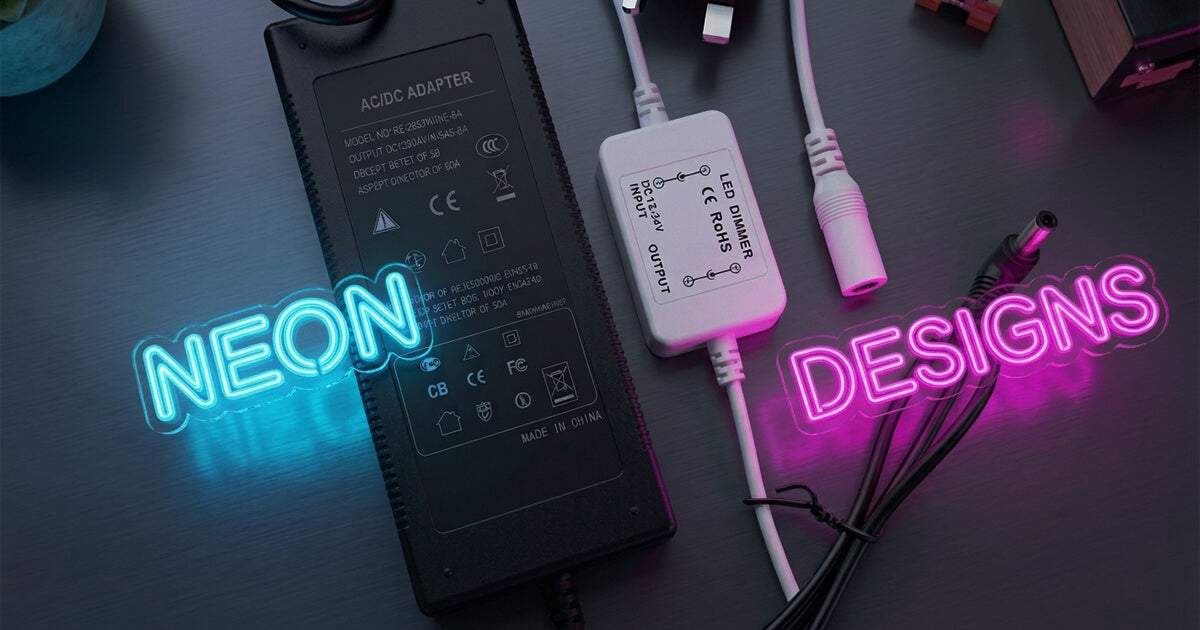
A sign that looks perfect at 8 p.m. can feel like a lighthouse to the apartment upstairs at 2 a.m. Two small features make these rules easier to live with: a dimmer and a timer. Every Neon Designs quote includes a dimmer remote, and a basic plug-in outlet timer can switch a plug-in sign off at closing time without anyone having to remember.
Why UL Listing Matters for Neon Sign Permits
A lit sign answers to two rulebooks, and the International Sign Association lays out the split. Article 600 of the National Electrical Code (NFPA 70) covers how to install electric signs. UL 48 covers the safety of the sign itself, with two related standards (UL 879 and UL 2161) covering sign components and neon power supplies.

That's why a permit application can ask for electrical details, including the sign's UL number, as LegalZoom's overview notes. Clear safety documentation gives an inspector fewer reason to send you back for more paperwork. Nobody frames a UL label on the wall, but it's exactly the kind of detail a reviewer looks for.
Every sign from Neon Designs uses UL-certified electronic components that are also CE-, FCC-, and RoHS-compliant. Certified components and a UL 48 listing for a finished sign aren't the same. If your city or landlord specifically asks for a listed sign, send us that requirement before you order, and we'll confirm exactly which documentation comes with your sign.
Sign Permit Rules in NYC, Chicago, and Other US Cities
There's no national sign permit. Each local government writes its own sign code, so the same neon sign can be exempt in one place and require two permits in another. These examples come from official city sources.
| City | Rule worth knowing |
|---|---|
| New York City | Unlit signs smaller than six square feet need no permit. Lit signs that extend past the building line may also need an annual illuminated sign permit. |
| Chicago | Painted or stuck-on window signs covering 25% or less of the glass skip the permit. Signs over the public way need a City Council ordinance and a Public Way Use permit. |
| San Francisco | The city says most signs require a permit. Temporary sale or lease signs are among the exceptions. |
| Huntington, NY | Every sign installed on a building needs a permit, and permits renew every three years. |
| Atlanta | Every illuminated sign requires an electrical permit. |
| Galena, IL | Window signs need a permit, can cover up to 20% of the glass, and each business gets one indoor neon sign. |
Sign codes get amended, so confirm the current version before you order. To find yours, search your city's name plus “sign code.” Many municipalities publish their codes through libraries like Municode, American Legal Publishing, or eCode360, and the sign rules often sit inside the zoning chapter.
Local codes are written for local streets. That's great for neighborhood character and less great for anyone hoping for one simple answer.
Sign Permit Myths That Cost Small Businesses Money
Each of these myths sounds reasonable, and each has a real counterexample on the record.
“My sign company said I don't need a permit.” Their opinion doesn't move the liability. Chicago's sign guide holds the property owner responsible for a non-compliant sign, even when a contractor said no permit was needed.
“My sign has been up for years, so it's grandfathered.” Age isn't approval. In 2018, a Bay Ridge hardware store in Brooklyn was fined almost $8,000 over an awning that had hung outside for at least three decades, according to the Brooklyn Eagle.
“LED neon isn't real neon, so neon rules don't apply.” Codes can regulate a sign by how it looks. Hebron, Ohio's code treats neon and neon-simulating signs the same way.
“It's inside the window, so it doesn't count.” In Chicago and Galena, Illinois, a neon sign behind the glass still needs a permit.
“Plug-in means permit-free.” A plug-in sign may skip the electrical permit. That says nothing about the sign permit, which is reviewed separately.
What Happens If You Install a Sign Without a Permit?
You can face fines, an order to take the sign down, and in some places a suspended business license, according to LegalZoom. And you'll likely still need the permit you skipped.

The numbers on record aren't small:
• Chicago: fines for unpermitted window signs ran from $350 to $15,000 per day until the signs came down, according to DNAinfo's 2017 reporting.
• New York City: in 2018, anonymous 311 complaints led to sign and awning violations across whole blocks of small businesses (CBS New York). Before the City Council passed a moratorium, those fines could reach $20,000, per the Queens Post.
• Brooklyn: one Bensonhurst business owner paid $6,000 for a sign violation, then another $2,800 to a sign company to permit his 45-square-foot illuminated sign (Brooklyn Paper).
The same illuminated sign cost its owner twice, once in fines and once in the permit he needed all along.
If you do get cited, the fix starts with the permit. Chicago's guide notes that for business signs, compliance is a defense at the administrative hearing, so getting the sign permitted is the first move. Skipping a permit to save a few weeks works about as well as skipping the parking meter to save a few minutes.
How to Apply for an Illuminated Sign Permit, Step by Step
Details vary by city, but the order of steps rarely changes. Order matters, because the expensive mistakes happen when installation comes before approval.

1. Check your lease first. If you rent, your landlord or property manager may have sign rules of their own, and some require design approval before production (Chron). Get that approval in writing.
2. Look up your sign code and zoning district. Note the size allowance, any window coverage limit, and any lighting or hours rules.
3. Get exact specs from your sign maker. You'll need dimensions, the mounting method, materials, power details, and safety documentation. Neon Designs sends a free custom neon sign mockup within 12 hours, so you'll have real dimensions for the permit form before you pay.
4. Submit the application. Expect to include photos of your storefront, a drawing of the sign with measurements, its location on the building, and electrical details if it's lit. LegalZoom notes that some cities also ask for your certificate of occupancy and business license.
5. Pay the fee. Fees vary by city and sign size. Chicago's sign permit page, for example, lists a $200 zoning review fee for an on-premise sign, plus a building review fee that scales with sign area, from $50 under 50 square feet to $1,000 at 500 square feet or more.
6. Pass any inspection, then install. Chicago's sign permit page is blunt here: a sign installed before its permit is issued is subject to citation.
Review times vary from city to city. Ask the permit desk for its current turnaround before you plan a grand opening around your new sign.
Frequently Asked Questions About Neon Sign Permits
Does an LED neon sign need a permit?
It depends on where it hangs. An exterior LED neon sign is treated like any other illuminated sign and generally needs a sign permit. If it's inside a window, it depends on local window sign rules. Chicago, for example, requires a permit for neon signs in every case.
Does a plug-in neon sign need an electrical permit?
Not always. The electrical permit covers new wiring, and a sign that plugs into an existing outlet doesn't add any. Some cities still require one for every illuminated sign (Atlanta does), so check before you assume.
Do I need a permit for a neon sign in my store window?
Possibly. Window signs are often regulated by how much of the glass they cover. Galena, Illinois caps window signs at 20% of the glass and requires a permit, while Chicago lets painted or stuck-on window signs skip the permit if they cover 25% or less of the window.
Can I install my sign before the permit is approved?
No. Installing first can lead to fines and a removal order; in Chicago, a sign installed before its permit is issued can be cited.
Who applies for the sign permit, the business or the sign company?
Either can, and many sign companies offer permit help for an added fee. Responsibility still lands on the property owner if the sign isn't compliant, so ask for a copy of the approved permit.
Can I get fined for putting up a sign without a permit?
Yes. In Chicago fines for unpermitted window signs ranged from $350 to $15,000 per day in 2017, and New York City sign fines reached $20,000 before a City Council moratorium.
Your Storefront Sign Permit Checklist Before You Order
Permit problems are cheapest to solve before you order. Run through this list first:

• Read your lease and get your landlord's approval in writing.
• Look up your city's sign code for size limits, window coverage, and lighting hours.
• Decide between an indoor window sign and an exterior mount. Outdoor signs need a weatherproof build, such as an IP67-rated sign.
• Confirm your power source: an existing outlet or new wiring that requires an electrician.
• Measure your window, run the coverage math, and ask how your city measures sign area.
• Get a mockup with exact dimensions and ask for the sign's safety documentation.
• Submit the permit and wait for approval before anything goes on the wall.
The right sign won't fight your city's rules. A sign sized to your window, with a dimmer and clear paperwork, gives a reviewer little to question. When you're ready, start a custom neon sign design with your measurements in hand, or browse our neon sign collections for ready-made business and restaurant signs. For more answers like this one, read the rest of our Neon Guides.
This article is general information, not legal advice. Sign codes change, so confirm current requirements with your local building or planning department before you install.




Share: